
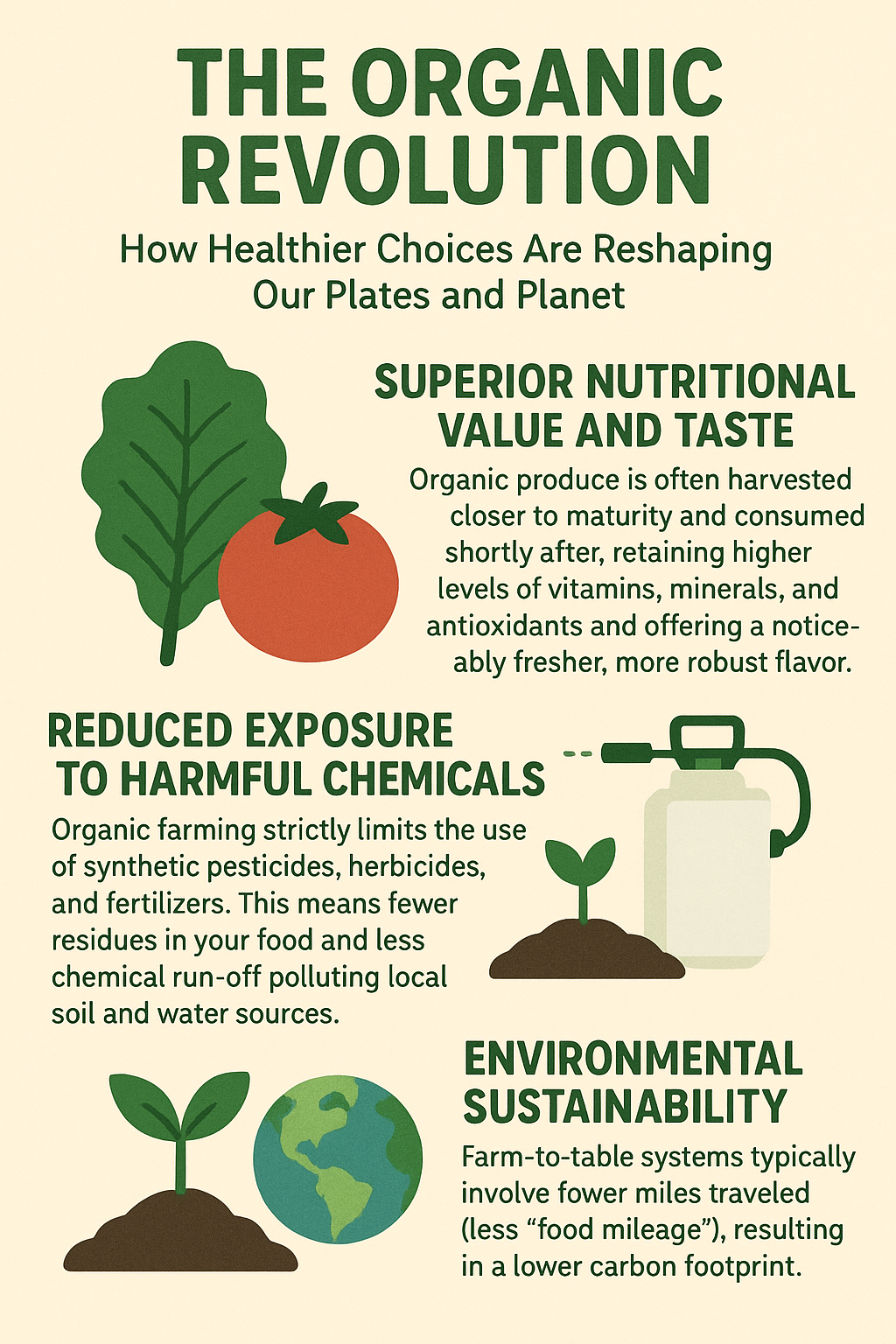
There is a quiet revolution happening across dinner tables, one that begins not in laboratories or factories, but in the soil. Organic food—once dismissed as niche or elitist—has matured into a symbol of conscious living. When produce is grown without synthetic chemicals and harvested closer to full maturity, it retains more of what nature intended: vitamins, minerals, and antioxidants that nourish the body rather than merely fill it. The taste is not just fresher; it’s a reflection of integrity—a reminder that food grown right doesn’t need embellishment to taste like life itself.

But this transformation runs deeper than taste buds. Organic farming shields consumers and communities alike from the toxic fallout of industrial agriculture. Every chemical not sprayed on a farm means cleaner water, richer soil, and safer ecosystems for pollinators and wildlife. Unlike conventional supply chains that stretch thousands of miles, farm-to-table systems significantly reduce “food miles,” shrinking the carbon footprint and ensuring produce reaches consumers at peak freshness. It’s a full-circle model of sustainability—one that honors both human health and environmental balance.
Choosing organic, therefore, is not a lifestyle luxury—it’s a civic choice. Every time a consumer reaches for locally grown organic produce, they cast a quiet vote for cleaner rivers, purer air, and more resilient communities. It’s a recognition that the health of people is inseparable from the health of the planet. In this sense, the organic movement is not a trend; it’s a testament to how small, deliberate decisions at the marketplace can nurture a global renewal.
Leave a Reply